Food & Dining Guide
- Doha's Culinary Identity
- Traditional Qatari Dishes You Must Try
- Eating at Souq Waqif
- Fine Dining and World-Class Restaurants
- International Cuisines of Doha
- Street Food and Casual Eats
- Cafes and the Karak Chai Culture
- Desserts and Arabian Sweets
- Food Markets and Grocery Shopping
- Dining During Ramadan
- Dietary Requirements and Halal Dining
- Dining Etiquette and Tipping
- Best Neighborhoods for Food Lovers
- Food Festivals and Culinary Events
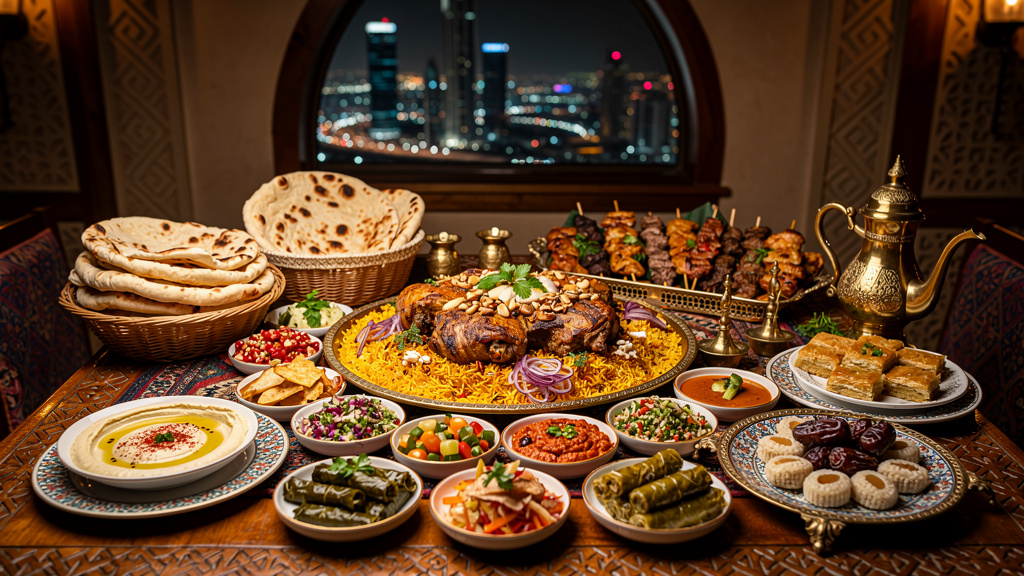
Doha's food scene is a revelation for travelers. In a city where more than 100 nationalities live and work side by side, the dining landscape is as diverse, ambitious, and deeply satisfying as the city itself. Whether you are sitting cross-legged on cushions in a candlelit Souq Waqif restaurant, spooning through a bowl of harees at a family-run kitchen in Al Najma, or sipping champagne at a 50th-floor rooftop table overlooking the glittering West Bay skyline, Doha consistently delivers culinary experiences that surprise, delight, and linger in memory long after you have returned home. This comprehensive food and dining guide will take you through every dimension of the Doha eating experience — from the centuries-old recipes of traditional Qatari cooking to the innovative creations of internationally celebrated chefs, from the irresistible pull of karak chai to the sugar-dusted wonder of luqaimat dumplings drizzled with date syrup.
Doha's Culinary Identity: A Crossroads of Flavors
To understand the food of Doha, you must first understand the forces that have shaped its culinary identity. Qatar sits at a geographical crossroads — the Arabian Peninsula to the west, Persia to the north and east, the Indian subcontinent across the wider Gulf, and the trading routes of East Africa and Southeast Asia stretching beyond. For centuries, these connections brought spices, ingredients, cooking techniques, and culinary traditions to Qatar's shores, creating a cuisine that is distinctly Arabian yet richly layered with influences from far beyond the peninsula.
The traditional food of Qatar is rooted in the ingredients that were available in a harsh desert and maritime environment — fish and shellfish from the Gulf, lamb and goat from the herds of the inland Bedouin communities, dates from the groves that dotted the oases, rice imported via the ancient dhow trading routes from India and the Far East, and a remarkable array of spices that arrived through the same commercial networks. Cardamom, saffron, turmeric, cinnamon, dried lime (loomi), cumin, and black pepper form the aromatic backbone of Qatari cooking, lending dishes a warmth and complexity that is immediately recognisable and deeply comforting.
The modern food scene of Doha is shaped by additional forces — the extraordinary wealth generated by oil and natural gas has attracted world-class chefs and restaurant groups from every corner of the globe; the massive expatriate population, which outnumbers Qatari citizens by a significant margin, has created authentic demand for cuisines from Lebanon, Syria, Egypt, India, Pakistan, the Philippines, Thailand, Korea, Japan, France, Italy, and dozens of other countries; and the government's deliberate investment in tourism and hospitality has raised the bar for quality and innovation across the entire dining sector. The result is a food city of remarkable breadth and depth, where you can eat extraordinarily well at every price point and in virtually every culinary tradition you can imagine.
Traditional Qatari Dishes You Must Try
No food guide to Doha would be complete without a thorough exploration of traditional Qatari cuisine — the dishes that have nourished families for generations and that remain central to the country's cultural identity. While many visitors come to Doha for the international dining scene, the truly rewarding culinary experience lies in seeking out authentic Qatari food, which is surprisingly under-represented in the restaurant scene but deeply satisfying when you find it.
Machboos (Majboos): The National Dish
Machboos is the undisputed king of the Qatari table, a magnificent rice dish that holds a place of honor at every family gathering, celebration, and special occasion. At its heart, machboos is deceptively simple — basmati rice cooked with meat (typically lamb, chicken, or fish) in a richly spiced broth — but the depth of flavor achieved through the careful layering of spices, the slow rendering of onions into a deep caramel base, and the addition of dried limes, which contribute a tangy, slightly bitter note that is uniquely Gulf, elevates this dish to something truly extraordinary. The rice absorbs every nuance of the broth, each grain distinct yet infused with flavor, while the meat — cooked until it falls apart at the touch of a fork — crowns the dish with protein-rich satisfaction.
The preparation of machboos varies from household to household, with each family guarding their particular blend of spices and techniques as a treasured secret. Some cooks add a layer of crispy fried onions (known as "daqoos") on top; others serve it with a tomato-based sauce that adds acidity and sweetness. Fish machboos, made with fresh hamour (grouper) or other Gulf fish, is particularly popular in coastal communities and represents the maritime heritage of Qatar. Lamb machboos is considered the most prestigious version, often prepared for guests and celebrations. You can find authentic machboos at traditional restaurants in Souq Waqif, at dedicated Qatari cuisine restaurants such as Shay Al Shموs and Al Aker, and increasingly at hotels that have recognised the growing tourist interest in local food.
Harees: The Comfort Food of Arabia
Harees is one of the oldest and most beloved dishes in the Gulf, a porridge-like preparation of wheat and meat that has been eaten across the Arabian Peninsula for centuries. The dish is made by slow-cooking cracked wheat with tender pieces of lamb or chicken until the grains break down into a smooth, creamy consistency that is both nourishing and deeply comforting. The result is a dish of pure, elemental satisfaction — the flavour is subtle but deeply warming, with the natural sweetness of the wheat complementing the savory richness of the meat. A generous knob of ghee (clarified butter) melted on top adds a luxurious finish, and a sprinkle of cinnamon and sugar is sometimes added for those who prefer a slightly sweet variation.
Harees holds particular cultural significance during Ramadan, when it is one of the most popular dishes served at iftar, the meal that breaks the daily fast. Its smooth, easy-to-digest texture makes it an ideal food for those who have been fasting all day, and its high caloric density provides the energy needed to sustain through the evening prayers and activities. During Ramadan, the aroma of harees cooking fills kitchens and restaurant kitchens across Doha, and it is not uncommon for families to send pots of harees to neighbours and friends as an act of generosity and community.
Thareed: The Bread Stew
Thareed is a hearty lamb stew served over thin, crispy Arabic bread (known as regag) that softens and absorbs the rich, aromatic broth as it sits. The stew itself is a comforting combination of tender lamb, vegetables — typically including potatoes, carrots, courgettes, and tomatoes — and a fragrant spice base of cumin, coriander, turmeric, and black pepper. Thareed holds a special place in Islamic tradition; it is said to have been the favourite dish of the Prophet Muhammad, and this association lends it an almost sacred significance in many Muslim households. The dish is frequently prepared during Ramadan and for religious occasions, and it is a staple at family gatherings and festive meals.
Balaleet: The Sweet-Savory Breakfast
Balaleet is one of the most distinctive and delightful dishes in Qatari cuisine — a sweet vermicelli noodle preparation flavored with cardamom, saffron, and rose water, served with a thin, folded egg omelette on top. The combination of sweet noodles and savory egg might sound unusual, but the flavours work together beautifully, and the dish has a warming, aromatic quality that makes it a perfect breakfast or brunch offering. Balaleet is a beloved morning dish across the Gulf states and is frequently served at traditional Qatari breakfasts, particularly during Eid celebrations and family gatherings.
Madrouba: The Beaten Rice
Madrouba is a rich, creamy dish of rice cooked with chicken in a spiced broth until the rice breaks down into a thick, porridge-like consistency. The name comes from the Arabic word "madrub," meaning "beaten," referring to the vigorous stirring required to achieve the dish's characteristic smooth texture. Flavored with a blend of spices that typically includes turmeric, cumin, and cinnamon, and enriched with ghee and sometimes cream, madrouba is a luxuriously satisfying dish that exemplifies the comfort food tradition of Qatari cooking. Like harees, it is particularly popular during Ramadan but is enjoyed throughout the year as a hearty family meal.
💡 Where to Find Authentic Qatari Food
Traditional Qatari restaurants can be difficult to spot if you do not know where to look. Ask hotel concierges for recommendations, look for restaurants in the alleys around Souq Waqif, and keep an eye out for the annual Qatar International Food Festival, which often features dedicated Qatari cuisine showcases. Some of the best Qatari food is found at private home-dining experiences offered through local tourism platforms.
Eating at Souq Waqif: A Culinary Adventure
Souq Waqif is not merely the cultural heart of Doha — it is also one of the city's most rewarding dining destinations, offering an extraordinary concentration of restaurants, cafes, and eateries that span cuisines from across the Middle East, North Africa, and the Indian subcontinent. Eating at the souq is an experience that engages all the senses: the sights of sizzling grills and steaming pots, the sounds of animated conversation and traditional music, the aromas of spices and freshly baked bread mingling in the warm evening air.
Damasca One is widely regarded as the finest restaurant in Souq Waqif and one of the best in all of Doha. Set in a beautifully restored traditional building with high ceilings, ornate arches, and elegant Arabian decor, the restaurant serves exquisite Syrian-influenced Levantine cuisine. The mezze selection is outstanding — creamy hummus, smoky baba ghanoush, crispy falafel, fattoush salad with sumac-dressed vegetables, and dozens of other small plates that are perfect for sharing. The grilled meats are equally impressive, particularly the lamb chops and mixed grill platters, and the restaurant's signature desserts — including a sublime kunafa with cream and a rose-water scented muhallabia — provide a perfect conclusion to the meal.
For those seeking a more casual experience, the open-air cafes that line the souq's main thoroughfares are ideal for people-watching over a cup of karak chai, a plate of fresh manakish (flatbread topped with za'atar, cheese, or minced meat), or a shisha pipe. Parisa, a Persian restaurant with stunning tilework and mirror mosaics that rival the grand teahouses of Isfahan, serves magnificent Iranian dishes including jewelled rice, herb-crusted lamb, and fesenjan (walnut and pomegranate stew). The Turkish restaurant Sukar Pasha, with its beautiful pavilion setting, offers excellent Ottoman-inspired cuisine including perfectly grilled kebabs, pide, and the famous Turkish breakfast spread.
The Al Adhamiyah Iraqi Restaurant brings the bold, generous flavours of Iraqi cuisine to the souq, with standout dishes including masgouf (a whole river fish grilled over an open flame), slow-cooked lamb shanks, and an incredible selection of fresh-baked Iraqi breads. For Indian and Pakistani cuisine, which is hugely popular in Qatar given the large South Asian community, several restaurants in and around the souq serve outstanding biryani, tandoori specialties, and thali meals at remarkably affordable prices. The sheer variety of dining options within Souq Waqif means that you could eat there every evening of a week-long trip and never repeat a cuisine or a restaurant.
Fine Dining and World-Class Restaurants
Doha has established itself as a serious fine dining destination, with a collection of restaurants that rival those of Dubai, London, and Singapore in terms of quality, creativity, and ambiance. The city's luxury hotels, in particular, have attracted some of the biggest names in global gastronomy, creating dining experiences that are worth planning a trip around.
IDAM, located within the Museum of Islamic Art, is the creation of the legendary French chef Alain Ducasse and represents one of the most sophisticated dining experiences in the Middle East. The restaurant occupies a stunning space on the upper floor of the museum, with floor-to-ceiling windows offering panoramic views of the Doha skyline across the bay. Ducasse's menu is a masterful fusion of French haute cuisine and Arabian Gulf flavours — dishes such as lamb shoulder slow-cooked with Qatari spices, sea bass with saffron broth and preserved lemon, and a tasting menu that traces the flavour connections between Mediterranean France and the Arabian Peninsula demonstrate a deep respect for local ingredients and culinary traditions. The experience of dining at IDAM — the architecture, the views, the service, the food — is genuinely unforgettable and justifies its reputation as one of Doha's essential dining experiences.
Nobu Doha, perched at the top of the Four Seasons Hotel with spectacular views over West Bay, brings Nobu Matsuhisa's legendary Japanese-Peruvian fusion to the Gulf. The signature dishes — black cod with miso glaze, yellowtail sashimi with jalapeño, rock shrimp tempura, and the exquisite omakase tasting menu — are executed with the precision and quality that have made Nobu one of the most recognized restaurant brands in the world. The lounge area, with its cocktail menu and DJ sets on weekend evenings, extends the experience beyond the plate into a full evening of entertainment.
Hakkasan Doha, located at the St. Regis Hotel, offers sophisticated Cantonese cuisine in an atmosphere of moody elegance — think dark wood, lattice screens, and dramatic lighting. The Peking duck, prepared tableside with ceremony and skill, is among the finest in the Gulf region, and the dim sum selection, available at both lunch and dinner, is a masterclass in delicacy and flavour. For Italian fine dining, Ristorante Villaggio at the Ritz-Carlton and Roberto's in The Pearl-Qatar offer excellent pasta, seafood, and grilled meats with the warmth and generosity that characterise the best Italian cooking.
Morimoto Doha at the Mondrian Hotel brings the bold, inventive Japanese cuisine of Iron Chef Masaharu Morimoto to a visually striking setting designed by Marcel Wanders, with an open kitchen where diners can watch the theatre of sushi preparation and robata grilling. CUT by Wolfgang Puck at the Mondrian and La Maison de l'Entrecôte at the Kempinski offer premium steak experiences for meat lovers, while Zuma Doha, expected to continue its global reputation for contemporary Japanese izakaya dining, has quickly become one of the most sought-after reservations in the city.
International Cuisines of Doha
One of the greatest pleasures of eating in Doha is the extraordinary diversity of international cuisines available, reflecting the city's position as one of the most multicultural cities in the world. The massive expatriate communities from India, Pakistan, the Philippines, Nepal, Egypt, Lebanon, Syria, and dozens of other countries have created authentic culinary enclaves where you can eat food that is genuinely representative of these cultures — not diluted or adapted for local palates, but prepared with the same ingredients, techniques, and passion as in the home countries.
South Asian cuisine dominates the affordable dining scene in Doha, and the quality is outstanding. The neighbourhoods of Al Najma, Al Sadd, and parts of Industrial Area are home to scores of Indian, Pakistani, Bangladeshi, and Sri Lankan restaurants that serve extraordinary food at astonishingly low prices. A full meal of biryani, dal, tandoori chicken, naan bread, and raita might cost as little as 15 to 25 QAR (roughly 4 to 7 USD), and the quality often surpasses what you would find at far more expensive establishments. The Kerala community, one of the largest Indian regional groups in Qatar, has established excellent South Indian restaurants serving fluffy dosas, idli with sambar, and fiery fish curries that transport you straight to the backwaters of Kerala.
Lebanese and Levantine cuisine is arguably the most popular dining category in Doha after South Asian food, and the competition among Lebanese restaurants has driven quality to impressive heights. Em Sherif, a sophisticated Lebanese restaurant at the St. Regis, offers an elevated take on traditional dishes in an opulent setting, while more casual establishments such as Al Hallab, Al Manchul, and Salateen serve generous portions of grilled meats, fresh salads, and creamy hummus at reasonable prices. Egyptian cuisine is represented by restaurants such as Sobia and Sobhy Kaber, where hearty dishes like koshari (a satisfying mix of rice, pasta, lentils, and fried onions with tangy tomato sauce), ful medames (stewed fava beans), and hawawshi (spiced meat stuffed in bread) offer a taste of Cairo's famous street food culture.
East Asian cuisines have a strong presence in Doha. Japanese restaurants beyond the fine dining tier include excellent ramen shops, conveyor-belt sushi restaurants, and izakaya-style eateries. Korean restaurants serving barbecue, bibimbap, and kimchi stew have multiplied in recent years, catering to both the Korean community and the growing global appetite for Korean food. Thai and Filipino restaurants are found throughout the city, with clusters in the areas where these communities are concentrated. Chinese restaurants range from authentic Sichuan and Cantonese establishments to Hong Kong-style dim sum parlours and quick noodle shops.
Street Food and Casual Eats
While Doha is not traditionally known as a street food city in the way that Bangkok or Istanbul are, the casual dining scene has expanded enormously, and there are now plenty of places to enjoy quick, delicious, and affordable food throughout the city. The concept of street food in Doha is somewhat different from other destinations — owing to the extreme summer heat, much of the casual eating happens in small, air-conditioned cafeterias and takeaway shops rather than at outdoor carts or stalls, though Souq Waqif and the Corniche do offer outdoor food experiences during the cooler months.
Shawarma is ubiquitous in Doha and serves as the city's de facto street food staple. Virtually every neighbourhood has multiple shawarma shops serving tightly rolled wraps of thinly sliced, slowly roasted chicken or lamb, dressed with garlic sauce, pickles, and fresh vegetables. The quality varies, but the best shawarma in Doha — the kind where the meat is perfectly seasoned, the bread is freshly baked, and the garlic sauce has that addictive creamy pungency — is a genuine culinary pleasure that costs just 3 to 8 QAR. Look for shops with high turnover and freshly rotating spits for the best quality.
Falafel, hummus wraps, and fatayer (small stuffed pastries filled with cheese, spinach, or meat) are other popular quick eats that are available at bakeries and takeaway shops across the city. Manakish — flatbreads freshly baked in stone ovens and topped with za'atar (a blend of thyme, sesame, and sumac), stretchy cheese, or minced meat — are a beloved breakfast and snack option that originate from the Levant but have been enthusiastically adopted across the Gulf. The best manakish shops bake their bread to order, delivering it blistered and fragrant from the oven, and a freshly baked cheese manakish with a cup of tea is one of life's affordable pleasures.
Indian chaat — a category of savory snacks that includes samosas, bhel puri, pani puri, and dahi vada — is widely available at South Asian restaurants and takeaway shops, offering an explosion of flavours and textures (crunchy, tangy, spicy, sweet) in every bite. Grilled corn on the cob, roasted chestnuts, and fresh fruit juices are sold by vendors along the Corniche and in parks during the cooler months, adding a festive, seasonal dimension to the street food scene.
Cafes and the Karak Chai Culture
No guide to eating and drinking in Doha would be complete without a dedicated discussion of karak chai, the spiced milk tea that is nothing less than the unofficial national beverage of Qatar. Karak — the name comes from an Urdu word meaning "strong" — is a richly brewed tea made by simmering black tea leaves with milk, sugar, and a blend of spices that typically includes cardamom, saffron, and sometimes ginger or cinnamon. The result is a drink of extraordinary warmth and flavour, sweet and creamy with aromatic depth, served in small glasses that invite multiple refills.
Karak chai is woven into the fabric of daily life in Doha. It is the drink that fuels morning commutes, accompanies afternoon breaks, provides warmth during cool winter evenings, and serves as a social lubricant at gatherings of friends and colleagues. Karak shops and cafeterias are found on virtually every street corner in Doha, and many of them operate 24 hours a day, ensuring that a hot cup is never far away. The price is astonishingly modest — typically just 1 to 3 QAR for a glass — making it one of the most democratic pleasures the city offers. Chapathi and Karak, a popular local chain, has become something of a cult institution, while independent karak shops in areas like Al Sadd, Bin Mahmoud, and the Industrial Area each have their loyal followings who swear by the particular blend and preparation of their favoured establishment.
Beyond karak, Doha has embraced the global specialty coffee movement with enthusiasm. Third-wave coffee roasters and artisan cafes have proliferated across the city, offering single-origin pour-overs, expertly pulled espresso, and creative seasonal drinks in beautifully designed spaces. Flat White, a homegrown Qatari specialty coffee brand, has earned a devoted following for its excellent coffee and minimalist aesthetic. % Arabica, the Japanese specialty chain, operates several locations in Doha, while independent roasters such as Cortado Coffee and The Hub Cafe offer intimate, quality-focused experiences. Many of these cafes also serve excellent food, ranging from avocado toast and acai bowls to more substantial brunch menus, making them popular gathering places throughout the day.
Traditional Arabic coffee (qahwa) remains an important part of the cultural landscape, though it occupies a different niche from the bustling karak shops and trendy specialty cafes. Arabic coffee is lighter in body than karak or espresso, brewed from lightly roasted beans flavoured with cardamom and sometimes saffron, and served in small handle-less cups (finjal) from an ornate long-spouted pot (dallah). Offering Arabic coffee to guests is a fundamental expression of Qatari hospitality, and refusing it is considered impolite. The coffee is traditionally accompanied by dates, and the combination of the bittersweet, aromatic coffee and the rich sweetness of the dates is a pairing of elegant simplicity.
Desserts and Arabian Sweets
The sweet tooth runs deep in Arabian culture, and Doha offers an impressive array of desserts and confections that range from centuries-old traditional preparations to contemporary patisserie creations. Arabian sweets shops, recognisable by their glass display cases filled with colourful pastries and confections, are found throughout the city, and sampling their offerings is one of the great pleasures of a visit to Doha.
Luqaimat is perhaps the most beloved Qatari sweet — small, golden dumplings of fried dough, crispy on the outside and fluffy within, drizzled with date syrup (dibs) or honey and sprinkled with sesame seeds. The combination of textures and the caramel-rich sweetness of the date syrup make luqaimat utterly addictive, and they are a staple at Ramadan iftar tables, festive gatherings, and an increasing number of restaurants that have recognised their appeal to visitors. Kunafa, a Middle Eastern classic of shredded filo dough layered with cream or cheese, soaked in fragrant sugar syrup, and baked until golden and crispy, is another must-try dessert that appears on menus throughout the city. The best kunafa in Doha is said to be found at the Palestinian and Syrian sweet shops in Souq Waqif, where it is prepared fresh and served warm.
Baklava in its many regional variations — Turkish, Lebanese, Syrian, Iranian — is widely available, with dedicated baklava shops offering trays of delicately layered pastry filled with pistachios, walnuts, or cashews and bathed in honey or rose-water syrup. Umm Ali, an Egyptian bread pudding made with puff pastry, milk, cream, nuts, and raisins, is a warm, comforting dessert that appears on many restaurant menus and is particularly popular during the cooler months. Qatara, a traditional Qatari dessert of thin pancakes stuffed with cream and drizzled with syrup, and khanfaroush, a saffron-scented fried cake, are less commonly found but worth seeking out for their connection to authentic Qatari culinary traditions.
Food Markets and Grocery Shopping
For visitors who enjoy browsing food markets and sourcing ingredients, Doha offers several excellent options. The Central Market (Souq Al Mubarak), located near Souq Waqif, is a bustling wholesale and retail market where vendors sell fresh fruits, vegetables, meat, fish, and spices in a lively, authentic environment. The fish market section is particularly impressive, with displays of fresh-caught hamour, shrimp, crab, and other Gulf seafood that is still glistening with seawater. Arriving early in the morning provides the best selection and the most vibrant atmosphere.
For a more curated experience, Monoprix, Carrefour, and LuLu Hypermarket — the major supermarket chains in Qatar — offer extensive selections of international products, fresh produce, bakery items, and specialty foods. The Galeries Lafayette food hall in Place Vendôme and the food sections of major department stores provide premium imported products from France, Italy, Japan, and other countries. Organic and specialty food shops such as Torba Market and Farm Box Qatar have emerged in recent years, catering to the growing demand for organic, locally grown, and artisanal food products.
Dining During Ramadan: Iftar and Suhoor Experiences
Ramadan transforms the dining landscape of Doha in profound and beautiful ways. During the holy month, eating, drinking, and smoking in public during daylight hours is prohibited for everyone — Muslim and non-Muslim alike — though hotels maintain discreet dining areas for non-fasting guests. But it is after sunset that the true magic happens, as the city comes alive with iftar celebrations that represent some of the most memorable dining experiences Doha has to offer.
Iftar, the meal that breaks the daily fast, is a significant event in Ramadan. Traditionally, the fast is broken with dates and water or laban (a yogurt drink), followed by a full meal that often features the best and most beloved dishes of the year. Hotels across Doha compete to offer the most lavish and creative iftar buffets, with spreads that can include hundreds of dishes from Qatari, Levantine, Indian, Turkish, and international cuisines, along with dedicated dessert stations and live cooking stations. These hotel iftars are open to non-Muslim guests and represent an incredible opportunity to experience the generosity and communal spirit of Ramadan. Prices for hotel iftar buffets typically range from 150 to 350 QAR per person, and advance reservations are strongly recommended as they are extremely popular.
Suhoor, the pre-dawn meal eaten before the fast begins, is another distinctive Ramadan dining experience. Suhoor gatherings often extend late into the night, with families and friends meeting at restaurants and cafes that stay open until the early hours. The atmosphere is festive and social, with live music, shisha, and a relaxed conviviality that makes suhoor one of the most enjoyable social experiences of the Ramadan calendar. Souq Waqif is particularly magical during Ramadan suhoor hours, with the ancient market illuminated by lanterns and alive with music, laughter, and the clinking of tea glasses.
Dietary Requirements and Halal Dining
One of the most significant advantages of dining in Doha for many travelers is that virtually all food served in Qatar is halal, meaning it has been prepared in accordance with Islamic dietary law. This is mandated by Qatari law and applies to all restaurants, cafes, food courts, and food shops, with the exception of pork, which is not available in the vast majority of establishments (a small number of licensed outlets within certain international hotels may offer pork products in designated sections). For Muslim travelers who often face challenges finding halal food in non-Muslim countries, Doha is essentially worry-free — you can eat anywhere with confidence.
Vegetarian and vegan dining in Doha has improved considerably in recent years, though it remains less developed than in cities like London or Berlin. Indian and South Asian restaurants are typically the best options for vegetarians, with extensive selections of vegetable curries, lentil dishes, rice preparations, and breads. Lebanese and Middle Eastern cuisine also offers excellent vegetarian options, including hummus, falafel, tabbouleh, fattoush, and vine leaves. Several dedicated vegetarian and vegan restaurants have opened in Doha, and most upscale restaurants now include vegetarian and vegan options on their menus. However, vegans should be aware that many traditional Middle Eastern dishes contain dairy (yogurt, butter, cream) and that communicating specific dietary needs clearly is important.
Gluten-free dining is becoming increasingly accommodated, with many restaurants offering gluten-free options or willing to modify dishes upon request. Allergies and intolerances are generally well-understood at higher-end restaurants and international chains, though communication may be more challenging at smaller, more casual establishments. Carrying a card written in Arabic that explains your dietary requirements can be very helpful in these situations.
Dining Etiquette and Tipping Culture
Dining etiquette in Doha is generally relaxed and welcoming, and visitors are unlikely to commit any serious social faux pas. However, a few guidelines will help you navigate dining situations with grace and cultural sensitivity. In traditional Qatari dining settings, it is customary to eat with the right hand, as the left hand is considered unclean in Islamic culture. This applies particularly when eating with your hands (as is common with machboos and some other traditional dishes), though using cutlery is perfectly acceptable and common in restaurant settings.
If invited to a Qatari home for a meal — a great honor and a memorable experience — remove your shoes at the entrance, accept the Arabic coffee and dates that will be offered upon arrival, and be prepared for generous quantities of food. It is polite to try everything that is offered and to express appreciation for the cooking. Leaving a small amount of food on your plate signals that you have eaten enough; an empty plate may be interpreted as a sign that you are still hungry, prompting your host to serve more.
Tipping in Doha restaurants is appreciated but not obligatory. Many restaurants add a service charge of 10 to 15 percent to the bill, in which case additional tipping is not expected but is always welcome. If no service charge is included, a tip of 10 to 15 percent is appropriate for good service. For casual dining, rounding up the bill or leaving a few riyals is sufficient. At karak shops and casual cafeterias, tipping is not expected but small change left behind is appreciated. Hotel restaurant service staff, room service, and bar staff should be tipped similarly to restaurant standards.
Best Neighborhoods for Food Lovers
Different areas of Doha offer distinctly different dining experiences, and knowing which neighborhoods to target based on your culinary mood can greatly enhance your eating adventures in the city.
Souq Waqif and Msheireb: The epicenter of traditional and Middle Eastern dining. Best for authentic Arabian cuisine, Levantine food, Persian restaurants, and atmospheric evening dining. The most culturally immersive dining area in Doha.
West Bay: The fine dining capital of Doha. The concentration of luxury hotels in this district means that the city's most prestigious restaurants are within walking distance of each other. Best for celebratory dinners, business entertaining, and world-class gastronomy.
The Pearl-Qatar: Upscale waterfront dining in a Mediterranean-inspired setting. Porto Arabia's crescent boardwalk offers a stunning range of restaurants, from Italian and Japanese to steak houses and seafood, all with marina views. Best for leisurely weekend brunches and romantic evening meals.
Katara Cultural Village: A cultural dining experience with restaurants set among galleries and performance venues. Excellent Turkish, seafood, and international options in an architecturally beautiful environment. Best for combining dining with cultural activities.
Al Sadd and Al Najma: The heart of Doha's affordable international dining scene. Dense concentrations of Indian, Pakistani, Filipino, and other Asian restaurants offering authentic food at remarkably low prices. Best for adventurous eaters on a budget and those seeking genuine immigrant-community cooking.
Lusail Boulevard: The newest dining destination in greater Doha, with a growing collection of restaurants and cafes along the beautifully designed main boulevard. Best for contemporary dining in a modern, pedestrian-friendly environment.
Food Festivals and Culinary Events
Doha hosts several food-related events throughout the year that are worth planning your trip around if food is a primary interest. The Qatar International Food Festival (QIFF), typically held during the spring months, is the largest and most prestigious food event in the country, bringing together restaurants, chefs, food trucks, and culinary performers for several weeks of tastings, cooking demonstrations, pop-up dining experiences, and competitions. The festival takes place along the Corniche and at other venues across the city, creating a festive atmosphere that celebrates food as a cultural experience.
Many hotels host regular food-themed events, including Friday brunches — a beloved institution in Gulf culture where hotels offer expansive buffet spreads with free-flowing beverages from late morning through the afternoon. These brunches are social events as much as dining experiences, and they represent exceptional value, with prices typically ranging from 200 to 500 QAR per person for unlimited food and drink at some of the finest restaurants in the city. Popular Friday brunches include those at the Four Seasons, the St. Regis, the W Doha, and the Mondrian, each offering a different style and atmosphere.
The growing food truck scene in Doha, concentrated at events and designated food truck parks, offers another casual and contemporary dimension to the city's food culture, with vendors serving everything from gourmet burgers and artisan ice cream to fusion tacos and Japanese street food. Night markets during the cooler months, particularly during national celebrations and cultural festivals, provide additional opportunities to explore Doha's diverse culinary landscape in a vibrant, communal setting.
"In Doha, every meal tells a story — of the sea and the desert, of ancient trade routes and modern ambition, of families gathering and strangers becoming friends over a shared table. The food here is not merely sustenance; it is a gateway into the soul of a culture that has always understood that true hospitality begins with feeding the body and nourishing the spirit."
📌 Continue Exploring
Ready to plan the rest of your Doha adventure? Check out our Top Attractions Guide for the best landmarks and experiences, or visit our Practical Tips page for essential information on transportation, accommodation, and travel planning.